Choosing the right GI duct supplier can have a direct impact on the quality, installation, performance, and schedule of an HVAC project. For commercial buildings, industrial facilities, hospitals, hotels, warehouses, offices, and large infrastructure projects, ductwork needs to meet project specifications while being delivered on time and fabricated accurately.
But how do you choose a reliable GI duct supplier?
The lowest quotation is not always the most cost-effective option. Before selecting a supplier, HVAC contractors, MEP consultants, procurement teams, and project managers should evaluate technical compliance, material quality, fabrication capabilities, quality control, delivery capacity, documentation, and after-sales support.
Here are the key factors to consider when choosing a GI duct supplier for your next HVAC project.
What Is a GI Duct?
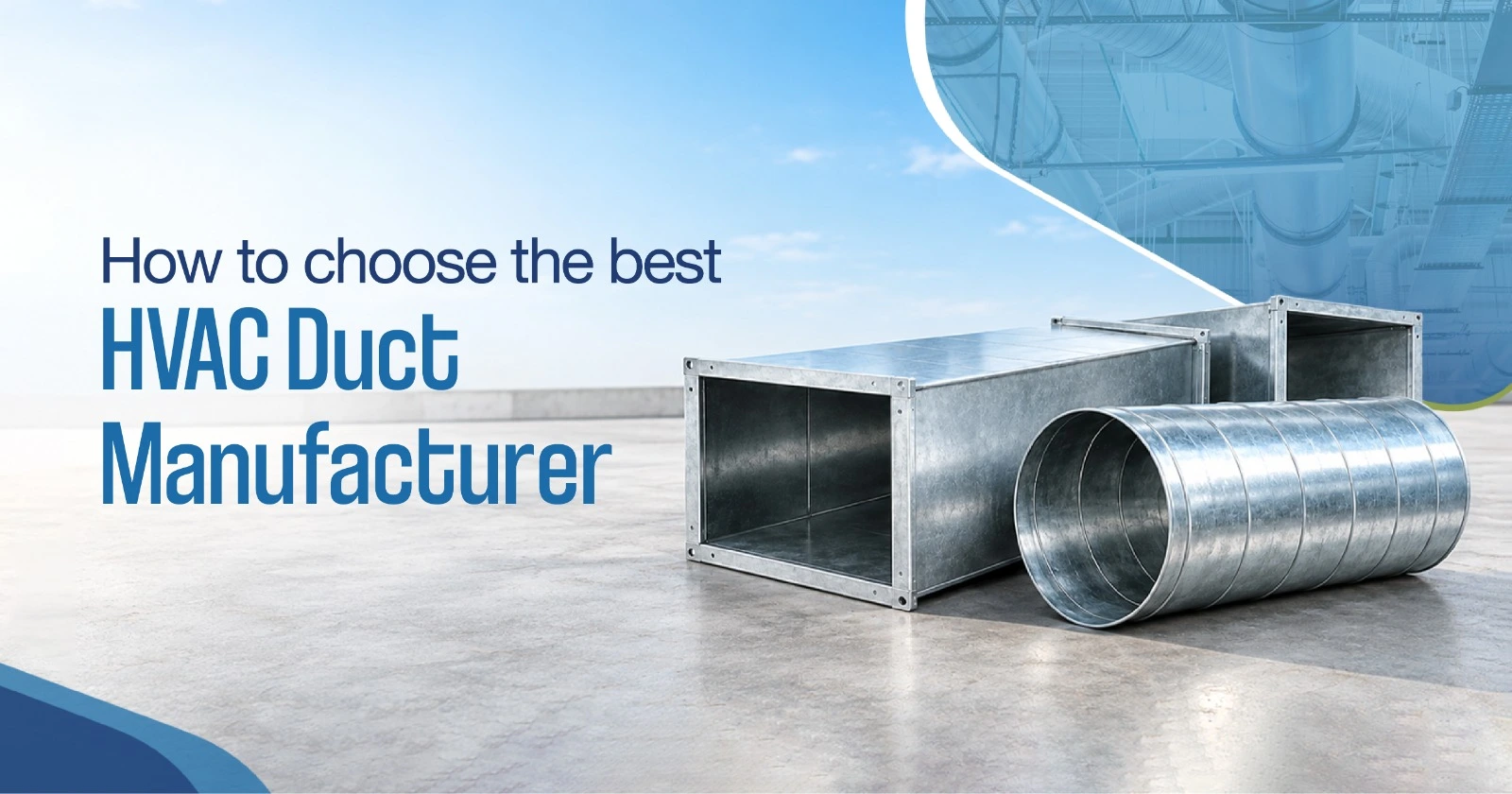
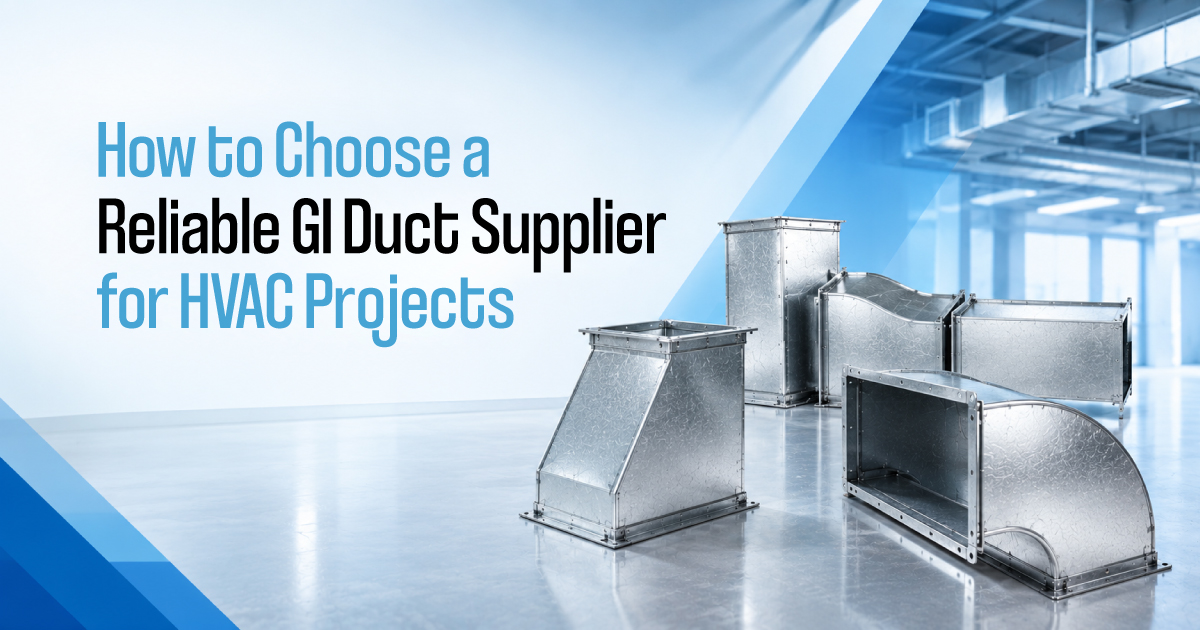
GI duct, or galvanized iron duct, is sheet-metal ductwork manufactured from galvanized steel. It is commonly used in HVAC systems for applications such as supply air, return air, fresh air, and ventilation.
GI ducts can be manufactured in different shapes and configurations, including rectangular, round, oval, and spiral ductwork. The appropriate duct construction depends on the project’s design, pressure requirements, dimensions, installation conditions, and applicable specifications.
For large projects, choosing a supplier with the ability to manufacture custom ductwork according to approved drawings and project requirements is particularly important.
8 Factors to Consider When Choosing a GI Duct Supplier
1. Check the Supplier’s Manufacturing Experience
Start by looking at the supplier’s experience in GI duct manufacturing rather than simply their experience in selling HVAC products.
An experienced manufacturer should understand duct fabrication, jointing, reinforcement, sealing, fittings, pressure requirements, and project-specific manufacturing requirements.
Ask potential suppliers:
- How many years have you been manufacturing HVAC ductwork?
- What types of projects have you supplied?
- Can you manufacture according to approved shop drawings?
- Do you handle customized duct dimensions and configurations?
- Can you support large-volume project requirements?
A supplier with relevant manufacturing experience is generally better positioned to identify fabrication issues before they affect installation.
2. Verify the Duct Construction Standard
One of the most important questions to ask a GI duct supplier is:
Which duct construction standard will the ductwork be manufactured to?
Depending on the project specification, ductwork may need to comply with standards such as SMACNA or DW/144. SMACNA publishes technical standards covering duct construction and installation, while DW/144 is another widely referenced ductwork specification. The applicable standard should always be confirmed against the project’s consultant specification.
Do not assume that two suppliers are quoting the same product simply because both quotations say “GI duct.”
Ask the supplier to clearly mention:
- Applicable duct construction standard
- Sheet thickness or gauge
- Pressure class
- Joint and flange system
- Reinforcement requirements
- Sealing requirements
- Insulation requirements, where applicable
- Testing requirements
This makes supplier quotations easier to compare and helps prevent specification differences after the purchase order is issued.
3. Check the Quality of GI Sheets
The quality of the raw material used to manufacture the duct can affect the durability and performance of the finished ductwork.
When evaluating a GI duct supplier, ask for details about the galvanized steel sheets or coils being used.
Important information may include:
- Material grade
- Sheet thickness
- Galvanization specification
- Coil or sheet manufacturer
- Material certificates
- Applicable project requirements
A reliable supplier should be able to provide the required material documentation for project approval and inspection.
4. Evaluate Manufacturing and Fabrication Capabilities
A supplier may offer GI ducts, but that does not necessarily mean they have the manufacturing capacity required for your project.
For larger HVAC projects, evaluate whether the supplier has suitable fabrication facilities, machinery, manpower, and production capacity.
Consider:
- Automated or precision fabrication equipment
- CNC cutting capabilities
- Forming and bending equipment
- Flanging and jointing systems
- Reinforcement fabrication
- Fitting fabrication
- Quality inspection procedures
- Production capacity
The supplier should also be capable of producing different duct configurations when required.
For example, a project may require rectangular GI ducts, round GI ducts, spiral ducts, fittings, transitions, elbows, reducers, or customized sections.
5. Make Sure the Supplier Can Manufacture to Approved Drawings
HVAC ductwork is rarely a simple off-the-shelf product on major construction projects.
Duct dimensions, fittings, access requirements, connections, pressure classes, and installation conditions can vary from one project to another.
A reliable GI duct manufacturer should be able to work from:
- Approved shop drawings
- BOQs
- Project specifications
- MEP drawings
- Duct layouts
- Consultant comments
- Site requirements
This is especially important when working on projects with complex layouts or limited ceiling and plant-room space.
A supplier who can review drawings and identify fabrication or coordination issues early can help reduce rework during installation.
6. Compare Lead Time and Delivery Capability
A technically good duct supplier can still create project problems if deliveries are consistently late.
GI ductwork is often manufactured according to project requirements, so production and delivery need to be coordinated with the construction schedule.
Before placing an order, confirm:
- Production lead time
- First-batch delivery schedule
- Regular delivery capacity
- Delivery locations
- Packaging and protection
- Labelling of duct sections
- Ability to handle urgent or revised requirements
For large UAE projects, local manufacturing and supply capability can also make coordination easier when drawings or quantities change during construction.
7. Review Quality Control and Inspection Procedures
Quality control should be part of the supplier selection process, not something checked only after the ductwork reaches the site.
Ask the supplier how they inspect ductwork during manufacturing.
A quality-control process may include checking:
- Dimensions
- Sheet thickness
- Joint construction
- Flange alignment
- Reinforcement
- Fittings
- Sealing
- Material documentation
- Finished duct condition
For projects with strict consultant or authority requirements, ask what inspection and documentation will be provided with the completed ductwork.
8. Consider Technical Support and Project Communication
A reliable GI duct supplier should do more than manufacture and deliver ductwork.
Good communication can be especially important when there are:
- Drawing revisions
- Quantity changes
- Site coordination issues
- Delivery changes
- Consultant comments
- Urgent fabrication requirements
Choose a supplier that has a clear point of contact for project coordination and can respond to technical and commercial queries efficiently.
Don’t Choose a GI Duct Supplier Based Only on Price
Price is an important part of procurement, but comparing quotations only by the final amount can be misleading.
Two suppliers may quote different prices because they are using different:
- Sheet thicknesses
- Construction standards
- Joint systems
- Reinforcement specifications
- Sealing requirements
- Material grades
- Delivery terms
- Testing requirements
Before comparing prices, make sure the technical scope is the same.
A lower initial price can become more expensive if it leads to material substitutions, rework, rejected ductwork, installation delays, or additional transportation and fabrication costs.
Why Local GI Duct Manufacturing Can Be Important for UAE Projects
For HVAC projects in the UAE, working with a locally based GI duct manufacturer can offer practical advantages when regular project coordination and delivery are required.
Local manufacturing can make it easier to coordinate production with project schedules, respond to drawing revisions, and arrange deliveries to construction sites.
HVAC Industries is based in ICAD-1, Mussafah, Abu Dhabi, and provides custom HVAC ducting solutions for commercial, industrial, residential, and infrastructure projects. Its product range includes GI and PI duct systems as well as different duct and fitting configurations.
Why Choose HVAC Industries for GI Duct Requirements?
HVAC Industries provides HVAC duct manufacturing and supply solutions for projects across the UAE.
The company manufactures different duct configurations and materials based on project requirements, including GI duct systems, pre-insulated ducts, stainless steel ducts, mild steel ducts, aluminium ducts, and related duct fittings.
For project-specific requirements, the team can support custom duct fabrication based on dimensions, configurations, and application requirements.
Whether you are an MEP contractor, HVAC contractor, consultant, developer, or procurement team, the right duct supplier should be able to combine manufacturing capability with technical understanding, consistent quality, and dependable project support.
Final Thoughts
Choosing a reliable GI duct supplier is about more than finding the lowest quotation.
Before awarding a ductwork package, evaluate the supplier’s manufacturing experience, applicable construction standards, raw material quality, fabrication capabilities, quality-control procedures, delivery capacity, documentation, and technical support.
Most importantly, make sure you compare suppliers on the same technical scope.
A supplier that can consistently manufacture specification-compliant GI ductwork, accommodate project requirements, communicate clearly, and deliver according to the construction schedule can help HVAC contractors and project teams reduce delays, rework, and procurement risks.
If you are looking for a GI duct manufacturer in UAE or supplier for an HVAC project in the UAE, evaluate your requirements carefully and request a quotation based on your approved drawings, BOQ, specifications, and project schedule.
Frequently Asked Questions
1. What should I check before choosing a GI duct supplier?
Check the supplier’s manufacturing experience, duct construction standards, GI sheet quality, fabrication capabilities, quality-control procedures, production capacity, lead time, delivery capability, documentation, and technical support.
2. What standards are commonly used for GI ductwork?
SMACNA and DW/144 are commonly referenced duct construction standards. However, the applicable standard should always be confirmed from the project’s approved specifications and consultant requirements.
3. What information should I provide when requesting a GI duct quotation?
Provide the approved drawings, BOQ, duct dimensions, material requirements, applicable construction standard, pressure class, insulation requirements, delivery location, and required delivery schedule wherever available.
4. Can GI ducts be custom manufactured?
Yes. GI ductwork can be fabricated according to project-specific dimensions, configurations, drawings, pressure requirements, and installation conditions.
5. Where can I find a GI duct supplier in the UAE?
HVAC contractors and procurement teams can evaluate UAE-based duct manufacturers based on their manufacturing capabilities, technical compliance, project experience, production capacity, and ability to meet the required delivery schedule.
6. What is more important: GI duct price or supplier quality?
Both price and quality matter, but quotations should first be compared on an equivalent technical scope. Differences in material thickness, construction standards, reinforcement, sealing, delivery, and documentation can affect the actual project cost.